
BEND ANGLES
Bend angle describes the change in direction through the bend. Radius describes how tightly that change happens. You need both to understand the shape.
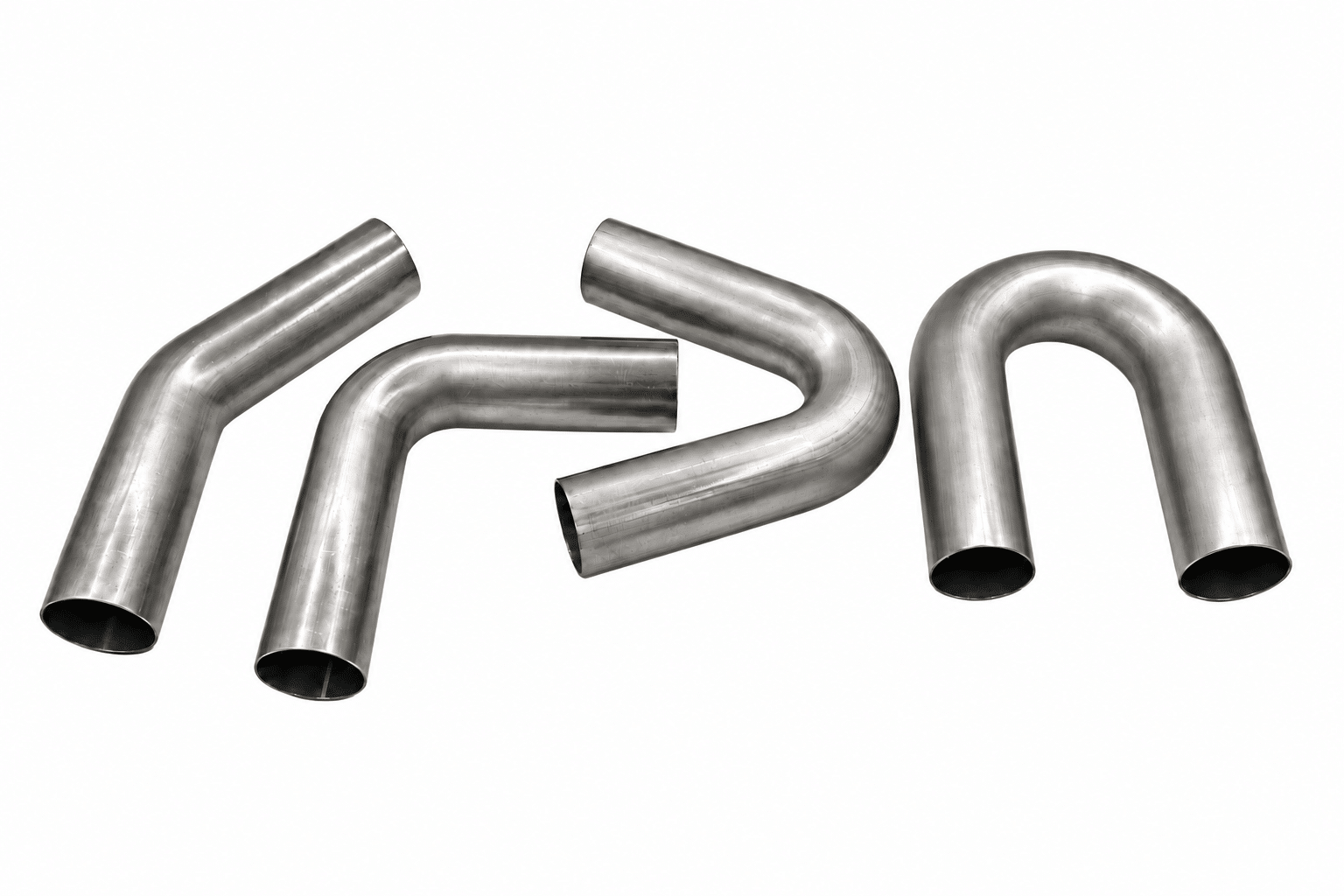
PTB's bend catalog is organized around 180°, 135°, 90° and 45° options. The material, OD, wall, CLR and straight sections still need to match your build; an angle alone is not a complete specification.
On a drawing, make the angle convention clear. The open angle between two legs can be different from the direction change described as the bend angle. A sketch with centerlines and an angle arrow removes the guesswork.
For a multi-bend part, also show how the bends are rotated relative to each other. Two parts can use the same angles and still end up pointing in different directions.
ANGLE AND RADIUS WORK TOGETHER
A 45°, 90°, 135° or 180° bend describes how far the tube changes direction. It does not specify the bend radius. Include both the angle and centerline radius, plus the straight lengths needed for trimming and connections.
KEEP EXPLORING
TAKE THE NEXT STEP
Choose a catalog part or bring your requirements into a project review.
BROWSE MANDREL BENDSPREPARE YOUR RFQ