
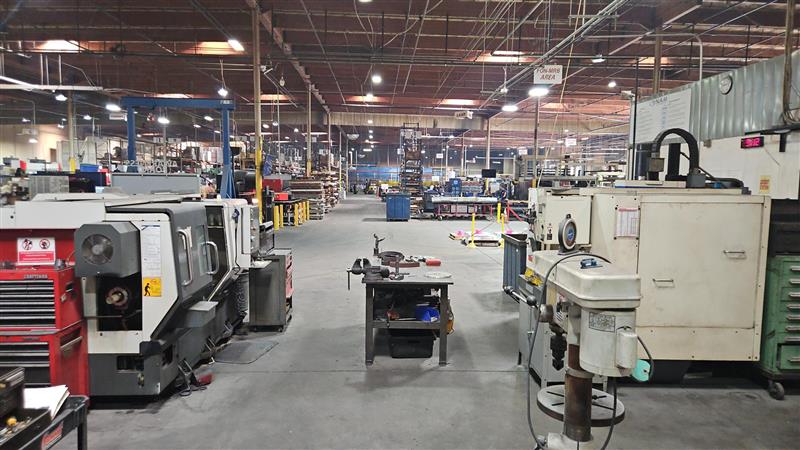
HOW WE BUILD IT
Understand the process.
Build around the requirements.
THE RIGHT START FOR YOUR PART
HOW WE BUILD IT explains the processes, the details that affect the job, and what we need to understand before a part moves into production.
Start with KNOW YOUR TUBE if you’re working through dimensions or component choices. Explore the process sections when you’re ready to look at how the pieces come together.
PTB brings American manufacturing experience to that conversation. We’ll work through the manufacturing route with you when we review your project.
EXPLORE HOW IT COMES TOGETHER
KNOW YOUR TUBE
Outside diameter, wall thickness, material and centerline radius work together to define a tube bend. Understanding those dimensions helps you choose a catalog part, explain a routing challenge or prepare a drawing for custom work.
A tighter radius can save space, but it also changes the forming challenge. Bend angle, straight lengths and the orientation between bends all affect how the finished tube fits into the assembly.
BENDING & FORMING
Forming turns a straight tube or flat blank into the geometry the assembly needs. For tube bending, the review starts with radius, angle, material and the straight sections needed between bends and at the ends.
End connections and mating features matter too. Identifying them early helps connect the forming operation to fit-up, welding and the finished part.
Mandrel Tube Bending →CUTTING
The cut establishes the profiles, lengths and openings that later operations depend on. Tube and flat-sheet parts need different preparation, but both start with a clear material specification and the current drawing.
Include hole locations, end profiles and critical edges in the review. Their relationship to bends and joints can influence the sequence of work and the fit of the assembly.
FABRICATION
Fabrication brings individual components together into a working assembly. Joint design, access for welding, fit-up and the dimensions that must be held all belong in the conversation before production begins.
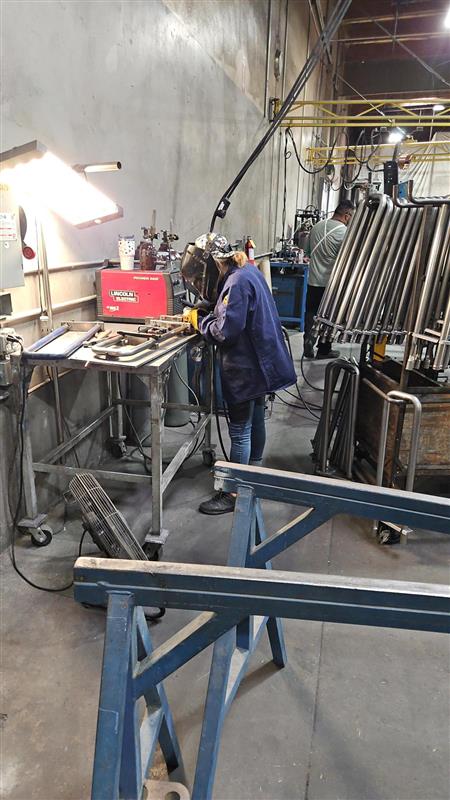
The welding work shown below is part of that progression: prepared components are positioned and joined around the requirements of the finished part. Tell us which surfaces, connections and mounting points control fit.
FINISHING
Finish requirements affect more than appearance. Coating coverage, mating surfaces, masking and product identification need to be considered alongside the manufacturing route.
Specify the required finish and color, identify areas that must remain uncoated, and show any marking requirements. Working through those details early helps avoid conflicts at final assembly.
ENGINEERING & PRODUCTION
A repeatable part starts with clear requirements. Drawing review establishes the material, geometry, critical dimensions and inspection needs before first-article work checks the proposed manufacturing approach.
Once the part is verified, the same requirements guide repeat production, assembly and kitting. Include quantities, drawing revisions and delivery needs so the review reflects how the parts will actually be used.
WHY PARTNER WITH PTB
PTB brings practical American manufacturing experience to the details that decide whether a part works. We start with the application and discuss the geometry, material, tooling and production needs together.
Bring a drawing, a model or the requirements you have established. Clear communication at the beginning gives us a stronger basis for reviewing the work from first article through production.
Start with CUSTOM MANUFACTURING →The PTB approach
FROM FIRST ARTICLE
TO PRODUCTION
The part and its requirements come first. Establish the manufacturing approach, verify the first article and build a process for repeat production.
UNDERSTAND
Define the application, material, critical requirements and production goals.
VERIFY
Review the approach, tooling and manufacturing requirements.
BUILD
Use first-article work to validate the process and the part.
REPEAT
Carry the established requirements into repeat production.
WHAT ARE YOU WORKING ON?
Need a catalog part? Head to OFF THE SHELF. Need something made around your requirements? Start with CUSTOM MANUFACTURING.